-
- No Comments
- August 11, 2026

Custom Social Media Design: 5 Proven Reasons Templates Fail
Custom Social Media Design: 5 Proven Reasons Templates Fail
Custom social media design is quietly becoming the difference between brands that get remembered and brands that get scrolled past. Free template libraries made it easy for every business to post something polished, but that same ease created a new problem: everyone’s feed started looking the same. When your posts use the same fonts, layouts, and stock icons as a dozen competitors in your niche, your audience stops noticing you at all, no matter how good your actual product or offer is.
This guide breaks down exactly why templates quietly cap your results, what custom social media design does differently, and when a template is genuinely fine to use, so you can make that call for your own brand with confidence.
Why Custom Social Media Design Outperforms Generic Templates
A template is built to work for thousands of different businesses at once, which means it can never be built specifically for yours. Custom social media design starts with your brand, your audience, and your specific goal for that post, not a one-size-fits-all layout someone else designed for a different industry entirely. That difference shows up in the numbers. Design-focused agencies have reported engagement increases of up to three times simply from switching a brand’s social content from templates to custom design, since audiences respond to visuals that feel intentional rather than recycled.
Think about scrolling through your own feed. A recognizable, on-brand post interrupts the scroll because it looks different from everything around it. A template post, no matter how nicely designed, often blends into the same visual noise as everyone else using that exact same pack, which quietly caps how much attention it can earn no matter how strong the caption is.
Brand recall works the same way. People remember visuals they have seen repeatedly in a consistent style far more easily than a one-off graphic, even a good one. A brand that never repeats its own visual choices, because every post comes from a different template, makes it harder for anyone to recognize its content at a glance a few weeks later.
5 Reasons Templates Don’t Convert
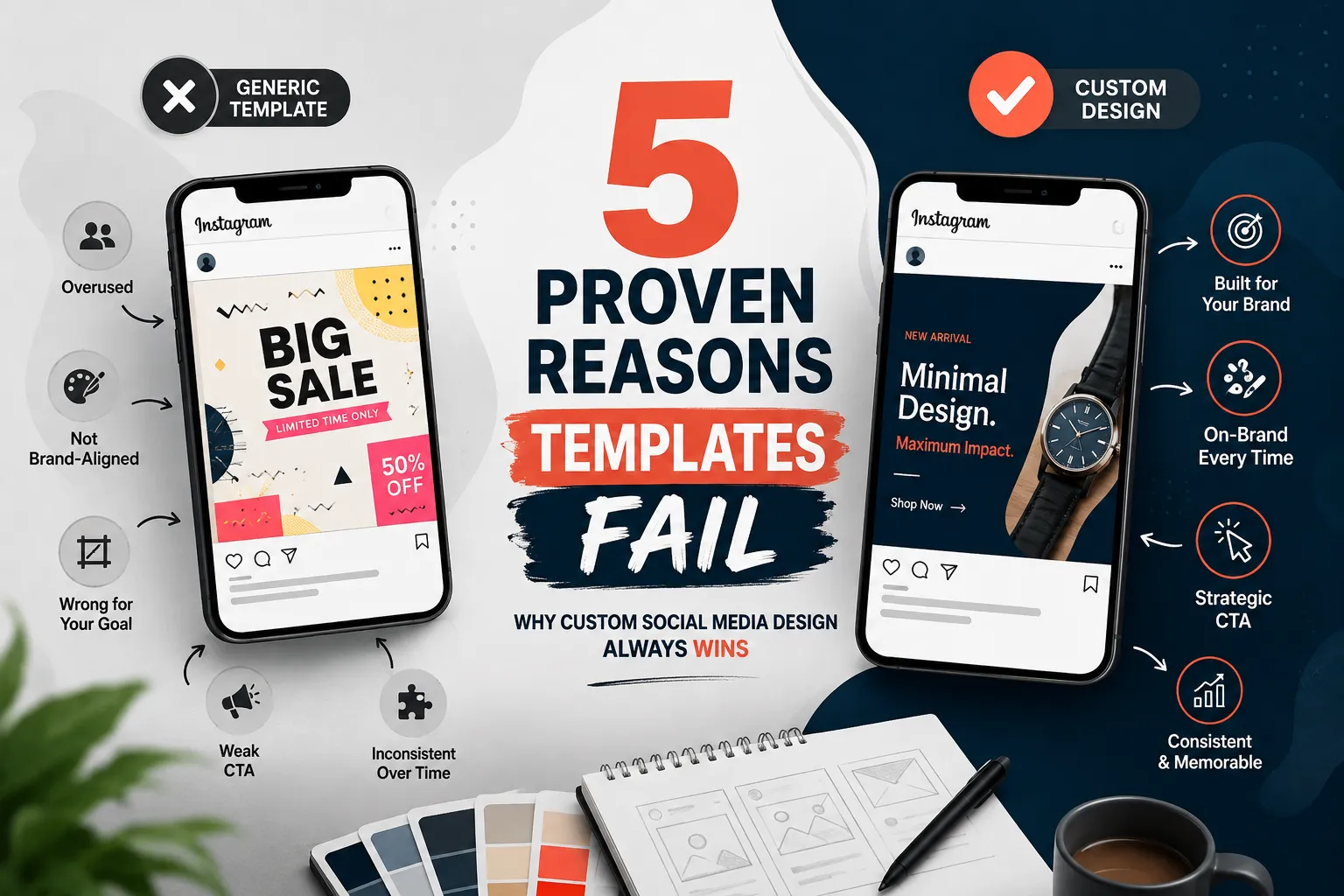
Templates feel efficient, but efficiency and effectiveness are not the same thing. Here are the five most common ways generic templates quietly hold your content back, even when they look clean and professional on the surface.
- Everyone else is using them too. Popular template packs get downloaded by thousands of businesses, so your “unique” post is often one of many nearly identical versions in your industry, sometimes even a direct competitor.
- They ignore your actual brand voice. A template’s color palette and typography are chosen to look nice in a marketplace preview, not to match your specific brand guidelines or personality.
- They are not built for your platform or goal. A layout meant for a generic quote post rarely fits a product launch, a testimonial, or a data-heavy carousel with the right visual hierarchy.
- They lack a strategic call-to-action. Most templates leave a vague text box for your message, with no thought given to where the eye should land first or what happens next.
- They create inconsistency over time. Mixing templates from different packs across months leaves your feed looking disjointed instead of recognizably yours to a returning visitor.
None of these problems mean a specific template is badly made. They simply were not made for your brand, and that gap becomes more visible the more your audience grows and starts to expect a consistent look from you.
What Custom Social Media Design Actually Delivers
Custom social media design solves each of these problems directly. Every element, from color choices to type hierarchy to where your logo sits, is built around your actual brand guidelines and the specific goal of that post. A designer thinks about what a viewer should feel and do in the first second of seeing the graphic, then builds the layout backward from that goal, rather than fitting your message into a fixed shape someone else created.
That process also scales better than it sounds. Once a designer establishes your brand’s visual system, colors, fonts, spacing, and icon style, new posts can be produced quickly within that system, giving you both consistency and speed at the same time. Working with a team offering dedicated social media creative design also means your visuals stay platform-correct, from Instagram carousels to LinkedIn banners, without you needing to learn design software yourself.
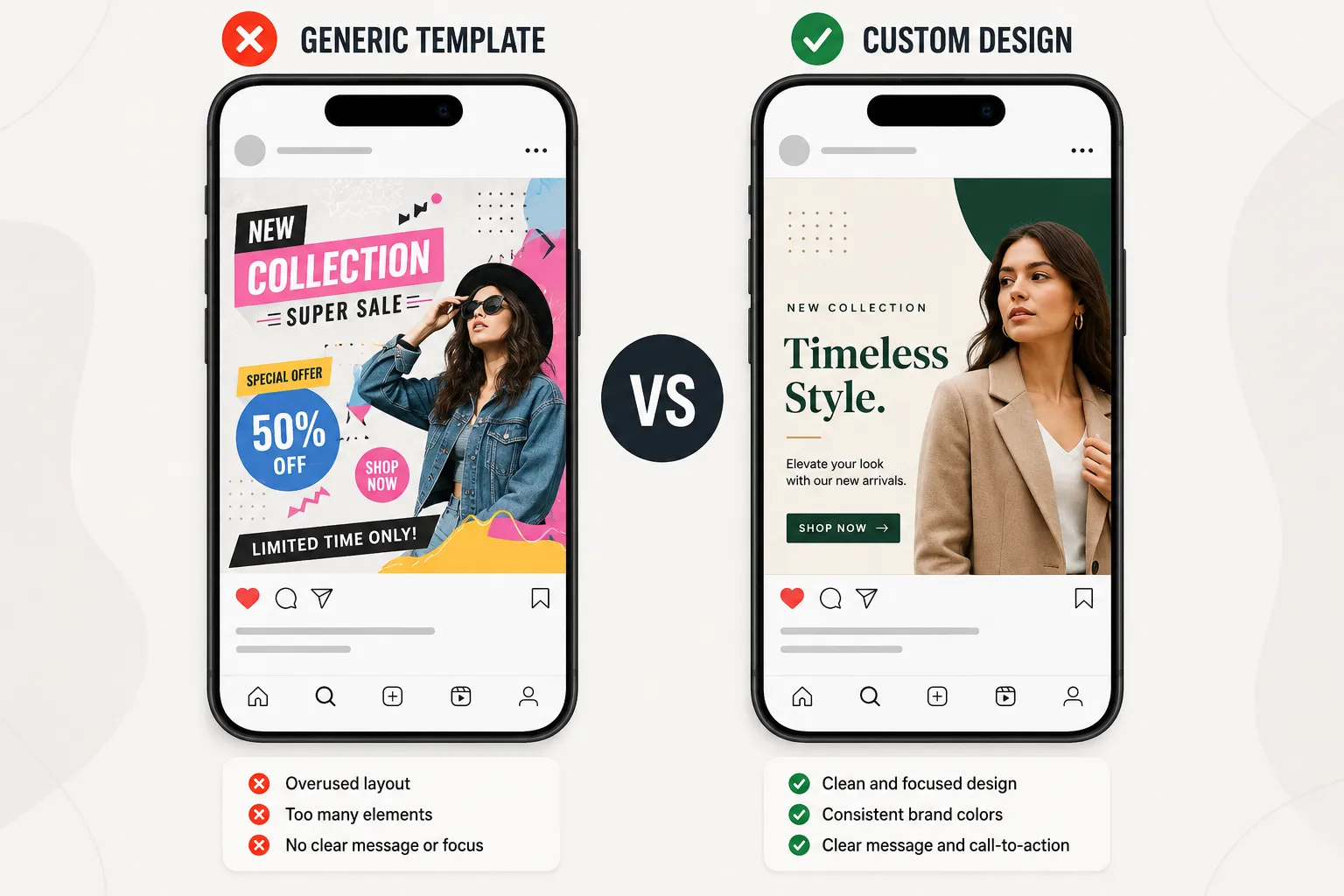
Consider a simple example. Two businesses post the same product announcement on the same day. One uses a template with a generic burst shape and stock font. The other uses a custom graphic in the brand’s own colors, with a clear headline hierarchy and a single obvious next step. The second post is far more likely to be remembered, shared, and clicked, even though the underlying announcement is identical.
When Templates Still Make Sense
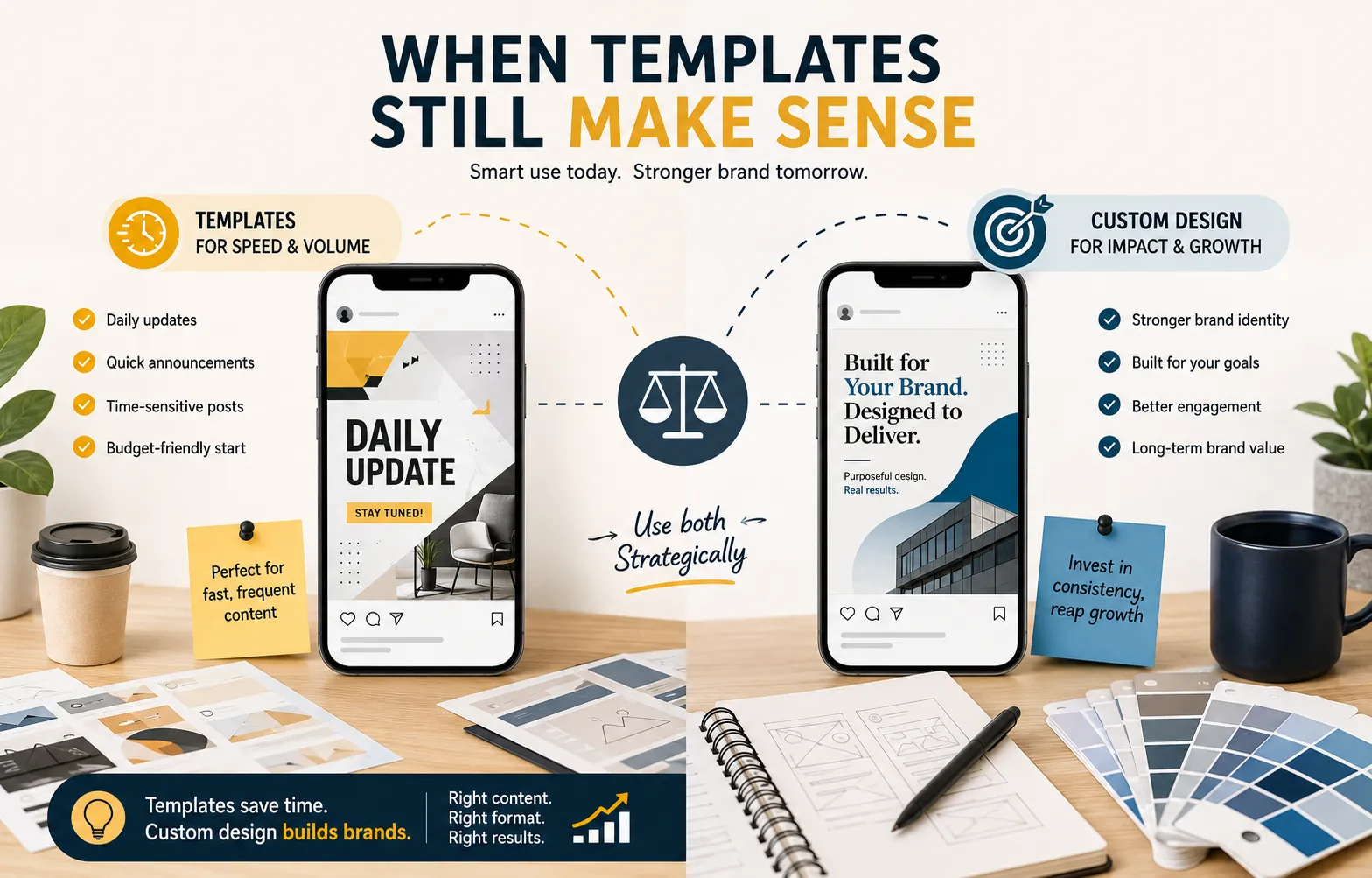
None of this means templates are always the wrong choice. A small business posting daily updates on a tight budget can reasonably start with templates, especially in the early stages when volume matters more than polish. Quick internal announcements or time-sensitive posts often do not need a fully custom treatment either, since speed matters more than polish in those specific moments.
The real risk is staying there indefinitely once your brand and following start to grow. Pairing custom visuals with a broader social media marketing strategy ensures the design work actually supports real business goals instead of existing for its own sake. For more detail on platform sizing, layout principles, and when custom design pays off, this social media design guide is a useful, practical reference.
Frequently Asked Questions
What is custom social media design?
Custom social media design means creating original graphics built specifically for your brand’s colors, fonts, voice, and goals, rather than filling in a pre-made template layout someone else designed.
Is custom social media design worth the extra cost?
For most growing brands, yes. The engagement and brand recognition gains typically outweigh the higher upfront cost compared to free or paid templates over the course of a few months.
Can I mix templates and custom design?
Yes. Many brands use custom design for key campaigns and templates for routine daily posts, as long as both still follow the same brand guidelines and color palette.
How do I know if my templates are hurting my brand?
If your engagement has plateaued or your posts look similar to competitors using the same template packs, it is worth testing custom design on a handful of posts to compare results directly.
How long does custom social media design take to produce?
A single custom graphic can take a day or two, while a full month of platform-specific content typically takes one to two weeks to design, review, and approve.
Conclusion
Templates will always have a place for quick, low-stakes posts, but they were never built to carry your entire brand. Custom social media design gives every post a reason to exist, a clear message, and a visual identity nobody else can copy. If your engagement has stalled, the fix is rarely more posts published more often. It is usually better design behind the posts you are already making, built around a brand system that is actually yours, one that a scroller recognizes as you before they even read the caption.


