-
- No Comments
- August 15, 2026

Portfolio Website Design: Earn More as a Freelancer
Portfolio Website Design: Why Freelancers Can’t Skip This Anymore
Portfolio website design decides something before a client ever messages you. It decides whether they trust you enough to reply at all. A Behance profile or an Upwork gig page gets you discovered. It rarely gets you hired on its own. Your listing sits next to fifty others in the same feed, all competing for the same click.
A real portfolio website works differently. It’s yours. Nobody else’s work sits next to yours competing for attention. Clients land there already curious, and what they see next decides whether that curiosity turns into an actual project. That single difference is why so many experienced freelancers eventually invest in one.
The Data: What a Real Portfolio Actually Does for Your Rates
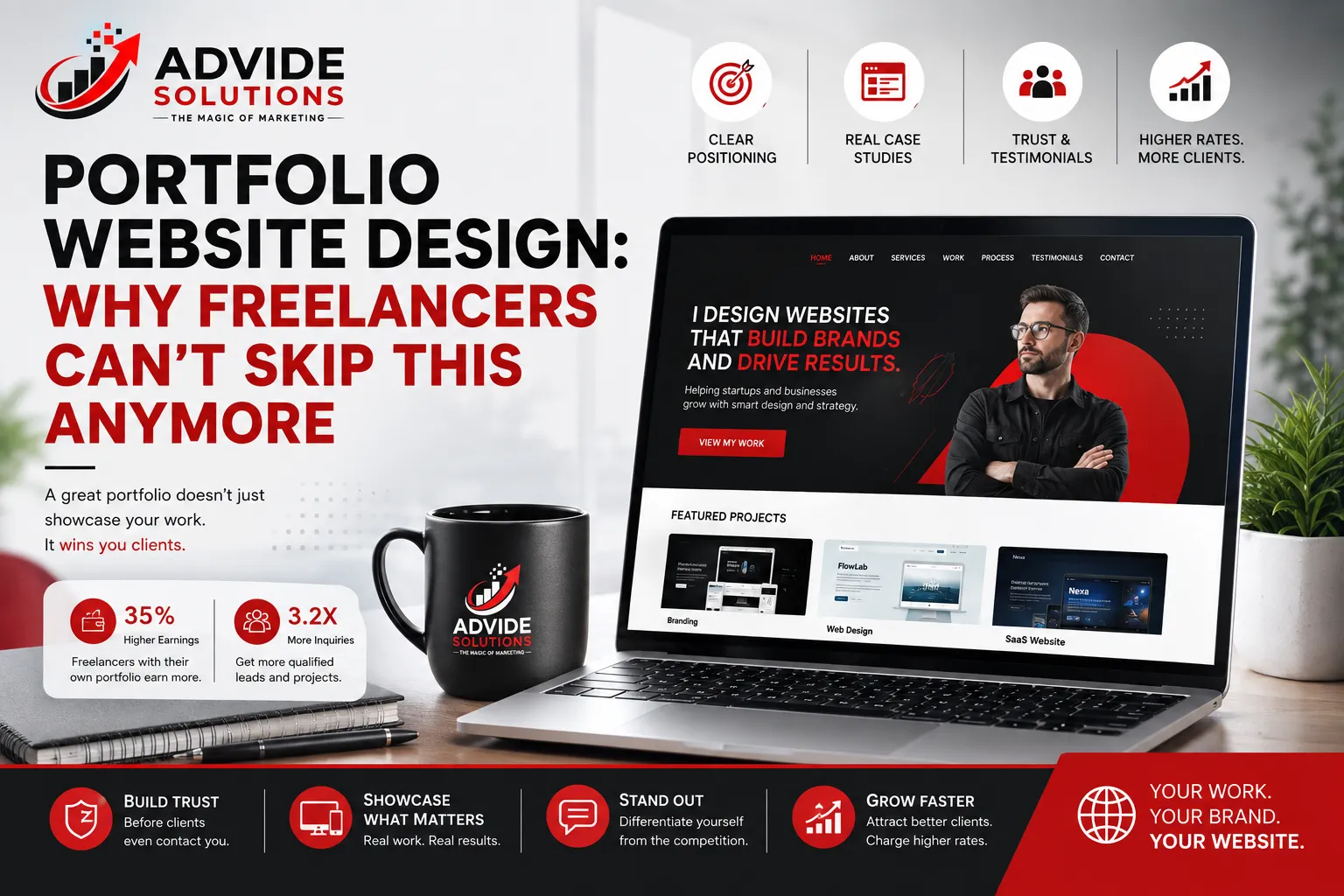
The numbers back this up clearly. Recent freelance industry research shows freelancers who maintain their own portfolio website reportedly earn around 35% more than those relying solely on marketplace profiles. Freelancers with a dedicated portfolio site have also reported receiving roughly 3.2 times more qualified inquiries. That gap comes from comparing them to freelancers depending only on platform profiles.
Referrals and personal networks still bring in the most clients overall. A portfolio doesn’t replace that. It backs it up. A referral often checks you out before replying. Your portfolio is frequently the deciding factor between a reply and silence.
What Belongs in Strong Portfolio Website Design
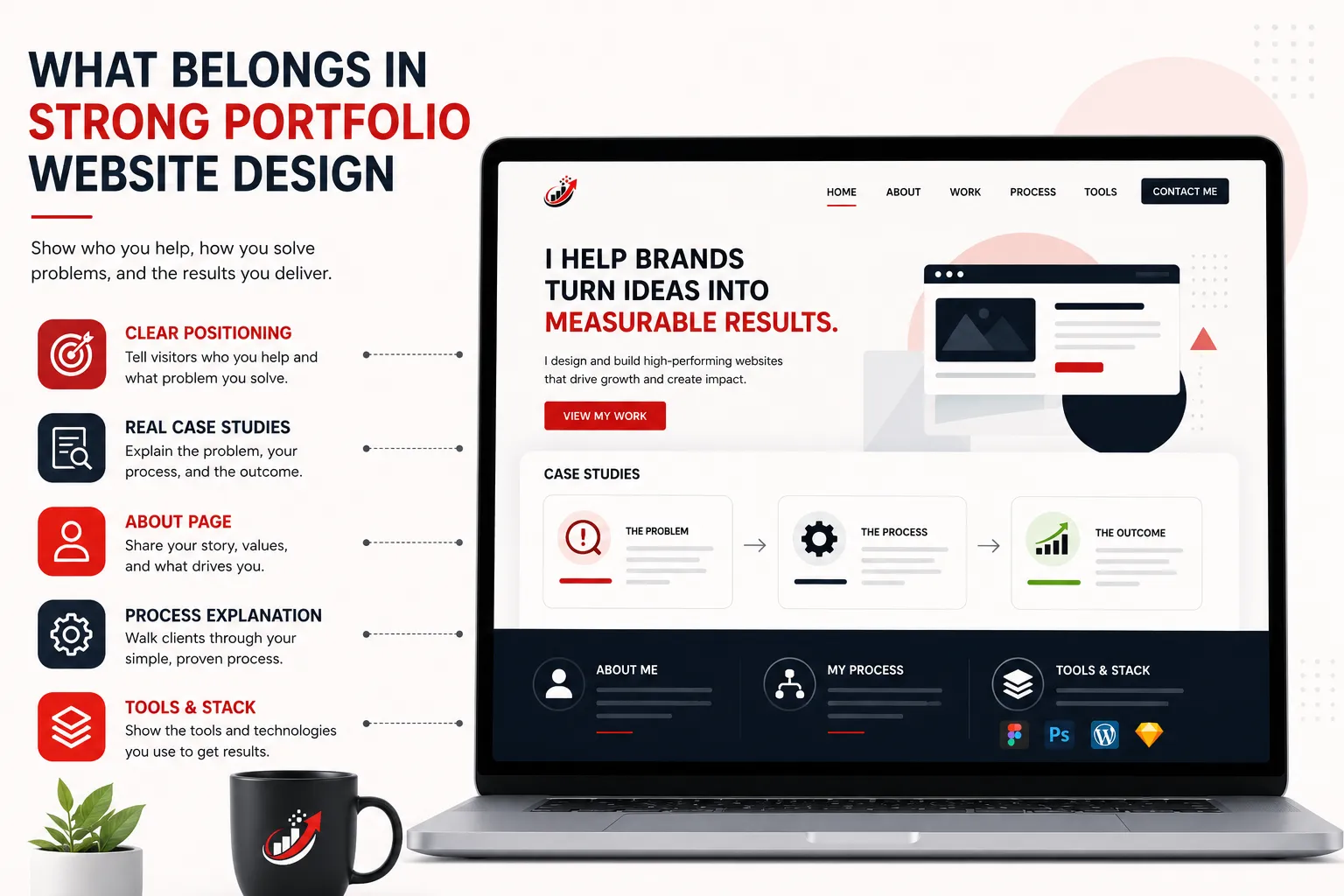
Good portfolio website design starts with a clear positioning statement above the fold. Tell visitors who you help and what problem you solve, before they even scroll. Skip the vague tagline. Say it plainly instead.
From there, include real case studies instead of a wall of screenshots. Each project should explain the problem, your process, and the actual outcome. A pretty mockup with no context tells a client nothing about how you think or work.
Round it out with a genuine About page, a simple process explanation, and your tools or stack. Clients want to know how you work, not just what you’ve made. This is the layer most rushed portfolio website design attempts skip entirely.
The 10-Second Test Every Portfolio Must Pass
Most visitors decide whether to keep reading within about ten seconds. That’s not much time to prove you can solve their problem. Your hero section carries the entire weight of that first impression.
Picture a stranger landing on your homepage for the first time. Can they tell what you do and who you help within a few seconds? If not, the rest of your portfolio rarely gets seen. Fix that section first, before touching anything else on the page.
Trust Elements That Turn Visitors Into Clients
Testimonials do heavy lifting here, even from smaller or early clients. Real names and photos add weight that a generic quote never will. If you’re just starting out, testimonials from collaborators, professors, or pro-bono work still count.
Pricing transparency helps too. Even a rough starting price filters out visitors who were never a fit. It also signals confidence to the ones who are. A short process page calms client anxiety before the first call ever happens.
Common Portfolio Mistakes That Kill Inquiries
A few mistakes show up constantly. Screenshots with zero context sit at the top of that list. A visitor can’t tell what problem you solved. They also can’t tell why it mattered, without a sentence of explanation next to it.
Vague positioning ranks close behind. “I’m a designer” tells a client nothing useful. Compare that to something specific: “I help SaaS startups turn confusing signup flows into ones people actually finish.” That version tells them exactly why to keep reading. Missing proof, no testimonials, no metrics, and no visible process all quietly kill trust before a client even reaches your contact form. Weak portfolio website design rarely fails because of bad taste. It fails because these basics get skipped.
Platform Profile vs a Real Portfolio Website
Platform profiles like Upwork, Fiverr, or Behance still matter for discovery. They put you in front of people actively searching for talent. What they can’t do is control the first impression. Your profile sits surrounded by direct competitors on the same page.
A dedicated portfolio website gives you that control back. You decide the layout, the story, and exactly what a visitor sees first. Most freelancers who build real, sustainable client bases eventually use both together, rather than picking one over the other. Good portfolio website design and an active platform presence tend to reinforce each other over time.
How Advide Solutions Approaches Portfolio Website Design
Advide Solutions builds portfolio sites for freelancers and independent professionals across a range of fields, from designers to consultants. We start with your positioning and your best three to five projects. We skip the generic template stuffed with every project you’ve ever touched.
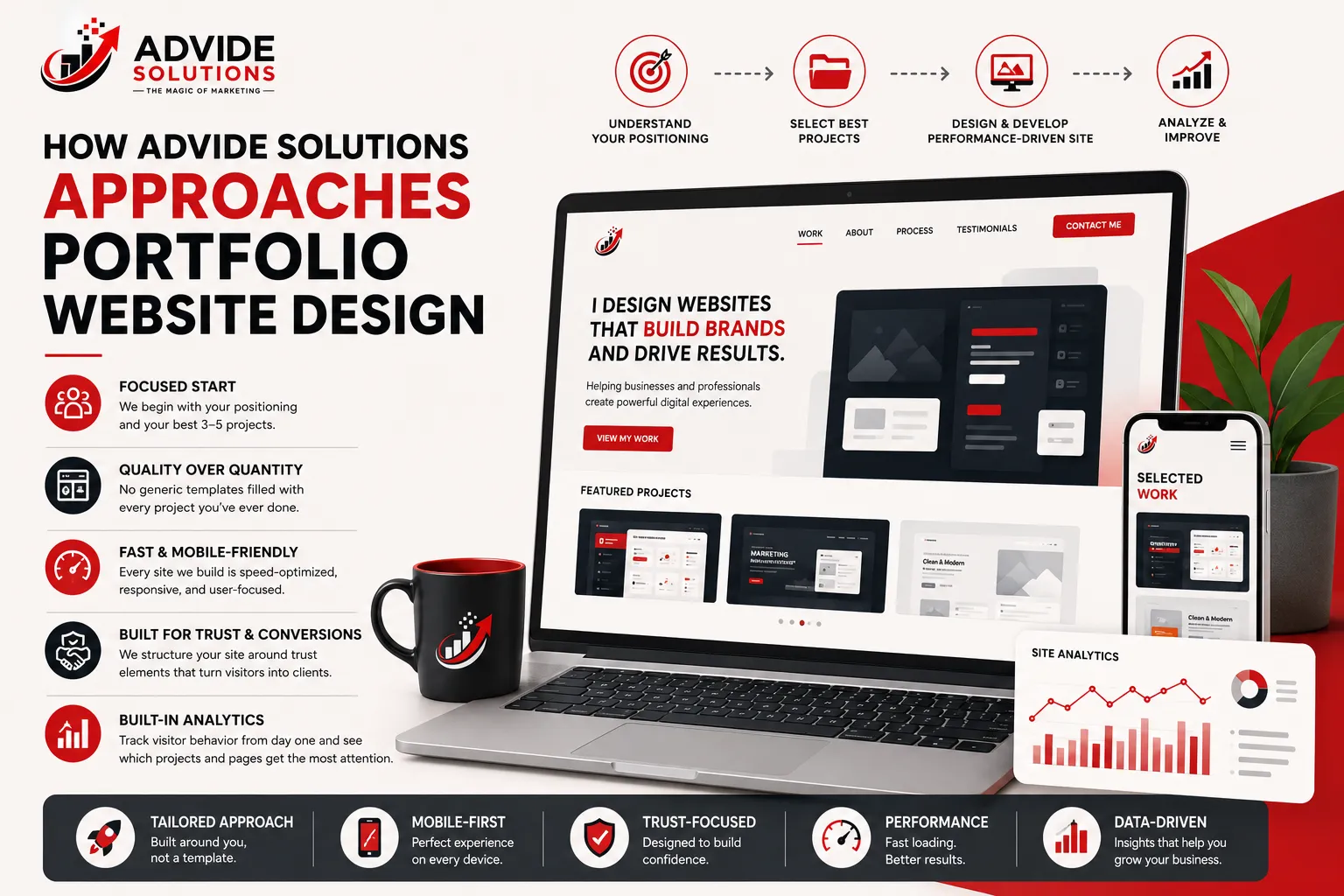
Every site we build stays fast and mobile-friendly. It’s structured around the trust elements that actually move a visitor toward contacting you. Our development team also builds in basic analytics from day one, so you can see exactly which projects and pages clients spend the most time on.
Frequently Asked Questions About Portfolio Website Design
How much does a freelance portfolio site cost?
Cost depends on how many pages and case studies you need. A simple five-page portfolio costs less than a site with detailed, multi-project case studies and custom animations. Get a specific quote once you know roughly how many projects you want to showcase.
Do I need a portfolio if I already have Behance or Dribbble?
Yes, ideally both. Platform profiles help with discovery, but a dedicated portfolio website gives you full control over your story and first impression. Most established freelancers use platform profiles to get found and their own site to close the deal.
How many projects should I include in my portfolio?
Three to five strong projects usually work better than ten mediocre ones. Quality and clear storytelling matter more than sheer volume. Pick the projects that best represent the kind of work you actually want more of.
Should freelancers show pricing on their portfolio?
Even a rough starting price helps filter out visitors who were never a budget fit. It also signals confidence. You don’t need exact numbers, but a general range sets expectations before the first conversation happens.
How often should I update my portfolio website?
Add new projects as you complete them. Review your overall positioning every six to twelve months too. An outdated portfolio with your oldest, weakest work on display can cost you inquiries just as easily as having no portfolio at all. Treat portfolio website design as an ongoing habit, not a one-time project you finish and forget.
Conclusion: Build Portfolio Website Design That Actually Converts
A portfolio website isn’t a nice-to-have anymore. It’s often the single biggest factor separating freelancers who command higher rates from everyone else. Those still competing purely on price inside a crowded platform feed usually don’t have one. Strong portfolio website design starts with clear positioning and real proof. It ends with a first impression that holds up in ten seconds or less.
Ready to build a portfolio that actually gets replies? Reach out to Advide Solutions, and let’s build something that works as hard as you do.


