-
- No Comments
- June 11, 2026

Does SEO Still Work in 2026?
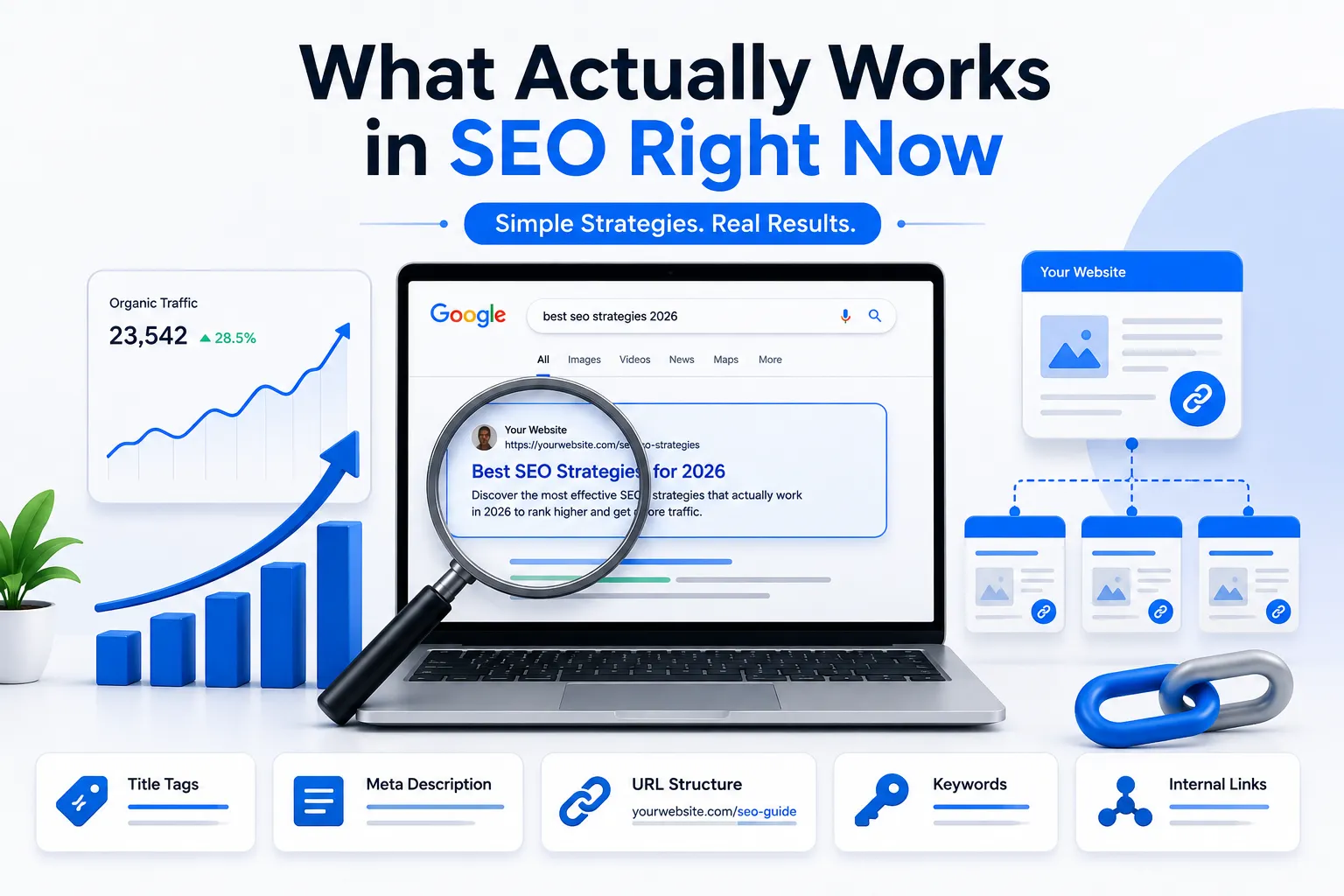
Does SEO still work in 2026? Every year, someone on the internet declares that SEO is dead. Every year, millions of websites prove them wrong. If you’ve been wondering whether SEO is still worth your time and money in 2026, the short answer is: absolutely yes — but the game has changed in ways you need to understand.
Every year, someone on the internet declares that SEO is dead. Every year, millions of websites prove them wrong. If you’ve been wondering whether SEO is still worth your time and money in 2026, the short answer is: absolutely yes — but the game has changed in ways you need to understand.
Let’s break it down clearly so you can make smart decisions for your website or business.
Why People Think SEO Is Dead
It’s a fair question. With AI-generated answers showing up directly in Google Search, voice assistants answering queries instantly, and social media platforms becoming mini search engines, it feels like traditional SEO might be losing its grip.
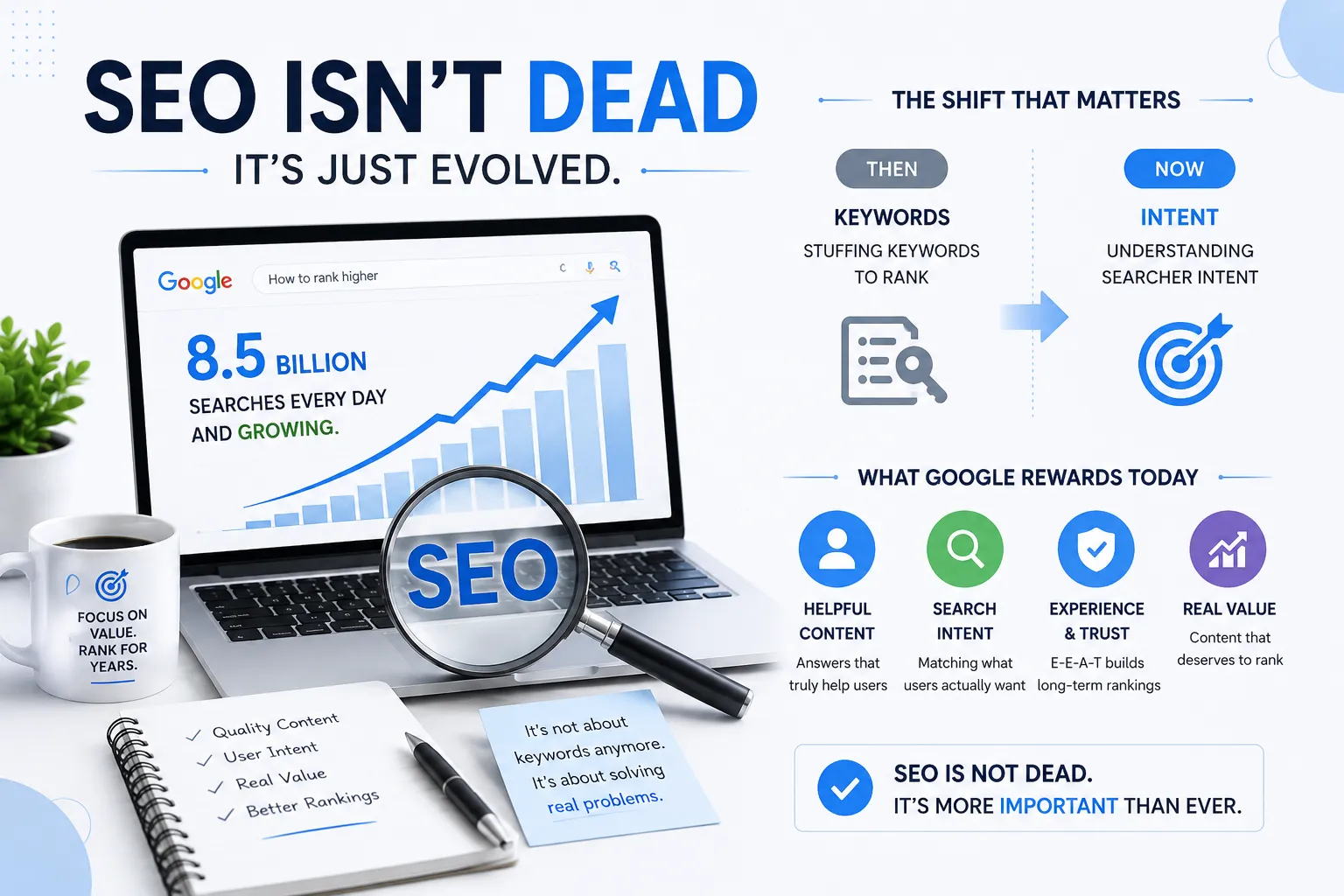
But here’s the truth: Google still processes over 8.5 billion searches every single day in 2026. That number hasn’t dropped — it’s grown. What has changed is how people search and what Google rewards.
The Shift from Keywords to Intent
In the early days of SEO, stuffing a keyword 50 times in an article could actually work. Today, Google’s algorithms are sophisticated enough to understand the intent behind a search, not just the words used. If someone types “best way to fix a leaking tap,” Google knows they want a step-by-step solution — not a sales page.
This is why content quality now matters more than keyword density alone.
How AI Has Changed SEO in 2026
AI Overviews Are Real — But So Is Organic Traffic
Google’s AI Overviews (formerly known as SGE) do appear at the top of many search results. These AI summaries pull information directly from high-authority web pages. Here’s the key insight most people miss: the pages that get cited in AI Overviews are the ones that rank well organically. So ranking on Page 1 now means two wins — a visible listing and a chance to be quoted in the AI summary box.
Content That Feels Human Wins
Google has become very good at detecting AI-generated fluff. Pages that read like a robot wrote them — with repetitive structure, no real opinion, and zero personal experience — are being filtered out of top results. In 2026, Google actively rewards content that demonstrates Experience, Expertise, Authoritativeness, and Trustworthiness (E-E-A-T). Real stories, original insights, and genuine advice now have a clear SEO advantage.
What Actually Works in SEO Right Now
On-Page SEO Still Forms the Foundation
Why Titles and Meta Descriptions Still Matter
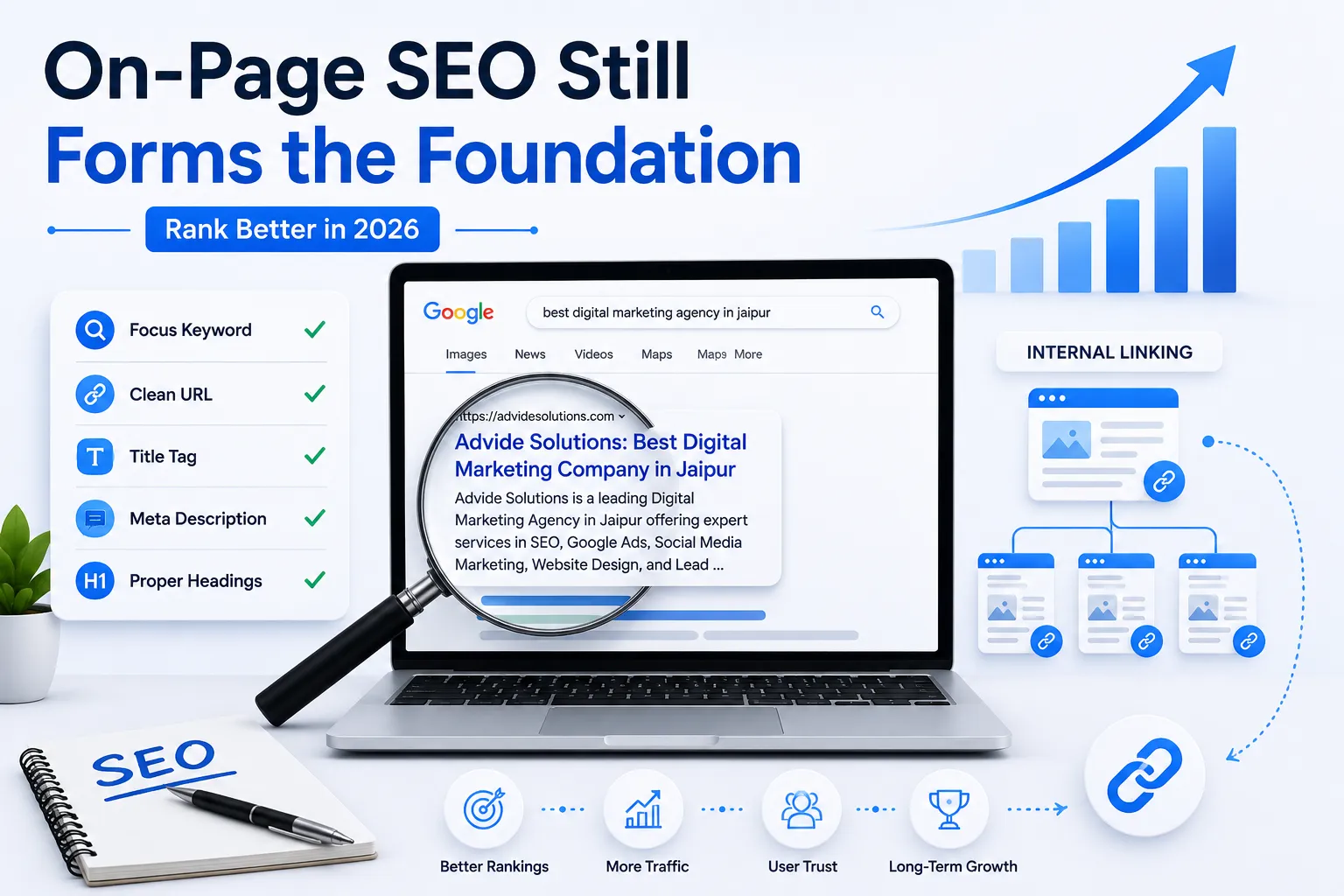
Your title tag is still the first thing both Google and a reader sees. A well-written title with your focus keyword near the beginning tells Google exactly what the page is about. Your meta description doesn’t directly affect rankings, but it absolutely affects click-through rates — and clicks are a ranking signal.
For any page to rank well in 2026, these basics must be in place:
- Focus keyword in the SEO title and near the beginning
- Focus keyword naturally included in the meta description
- A clean, short URL slug containing the keyword
- The keyword used in the first 100 words of the content
- Proper use of H1 through H6 headings to organize content
Internal Linking Is Still Underrated
One thing that many website owners ignore is internal linking — connecting one page on your site to another relevant page. This helps Google understand the structure of your website and helps visitors discover more of your content. Adding 2–3 internal links per blog post is a simple habit that builds long-term SEO strength.
Local SEO Is Booming in 2026
If you run a local business — a shop, clinic, restaurant, or service — local SEO is arguably the most powerful form of SEO available to you right now. “Near me” searches have continued to grow year after year.
Google Business Profile (formerly Google My Business) remains the cornerstone of local visibility. Businesses with complete, regularly updated profiles, strong review counts, and accurate location data consistently outrank competitors in local map packs.
For local businesses in India, especially in Tier 2 and Tier 3 cities, the competition in local SEO is still relatively low — which means the opportunity is massive right now.
The Role of Backlinks in 2026
Backlinks — links from other websites pointing to yours — remain one of Google’s strongest ranking signals. But the focus has shifted entirely from quantity to quality. One link from a trusted, relevant website is worth more than 100 links from random low-authority directories.
The best ways to earn quality backlinks in 2026 include:
- Publishing original research or data your industry wants to reference
- Writing guest articles for reputable websites in your niche
- Creating genuinely useful tools, calculators, or resources
- Building relationships with other content creators and businesses
Spam link schemes and paid link farms don’t just fail to work — they actively hurt your rankings now. Google’s spam detection has never been sharper.
Technical SEO: The Silent Ranking Factor
You could have the best content in the world, but if your website loads slowly, breaks on mobile, or confuses Google’s crawlers, you won’t rank. Technical SEO is what keeps the foundation of your site solid.
Key technical factors that still matter deeply in 2026:
- Core Web Vitals — page speed, visual stability, and interactivity scores
- Mobile-first design — Google indexes the mobile version of your site first
- HTTPS security — non-secure sites are flagged as untrustworthy
- Structured data (schema markup) — helps Google understand your content context
- Clean site architecture — logical URL structures and a clear sitemap
Even a 1-second improvement in page load time can result in measurable ranking improvements for competitive keywords.
Does SEO Give ROI in 2026?
One of the strongest arguments for SEO is the return on investment compared to paid ads. Google Ads stop working the moment you stop paying. SEO, when done right, builds compounding value over time. A blog post you publish today can bring in traffic for the next 3–5 years without additional spend.
For small businesses and startups especially, SEO is often the most cost-effective long-term marketing channel available. The upfront effort is real, but the ongoing returns are hard to match with any other digital strategy.
FAQ’s – Frequently Asked Questions:
Q1. Does SEO still work in 2026?
Yes, SEO absolutely still works in 2026. Google processes over 8.5 billion searches every day, and organic search still drives more than 53% of all website traffic globally. The strategies have evolved, but the results are very much real for businesses that do it right.
Q2. How long does SEO take to show results in 2026?
SEO typically takes 3 to 6 months to show meaningful results. It depends on your website’s age, competition level, and how consistently you publish quality content. Local SEO for small businesses can sometimes show results even faster.
Q3. Is SEO better than Google Ads for small businesses?
For long-term growth, SEO is more cost-effective than Google Ads. Paid ads stop delivering traffic the moment you stop spending. SEO builds compounding value — a well-ranked page can bring free traffic for years without any additional investment.
Q4. Has AI killed SEO in 2026?
No, AI has not killed SEO — it has changed it. Google’s AI Overviews actually pull content from high-ranking organic pages, so ranking well now gives you two wins: a visible search listing and a chance to be cited inside the AI summary box.
Q5. What is the most important SEO factor in 2026?
Content quality combined with technical SEO is the most important factor in 2026. Google rewards pages that demonstrate real Experience, Expertise, Authoritativeness, and Trustworthiness (E-E-A-T). Fast loading speed, mobile-friendly design, and genuinely helpful content together form the strongest SEO foundation.
Conclusion:
SEO didn’t die. It grew up. The tactics that worked in 2015 don’t work today, and that’s a good thing — it means lazy, low-quality content no longer gets rewarded. What works now is a combination of technically sound websites, genuinely helpful content, smart keyword strategy, and a consistent effort to build authority.
If you’re willing to invest the time (or work with someone who knows what they’re doing), SEO in 2026 is one of the most reliable paths to sustainable online growth. The businesses and creators who treat SEO as a long-term strategy — not a quick trick — are the ones winning search traffic every single day.


